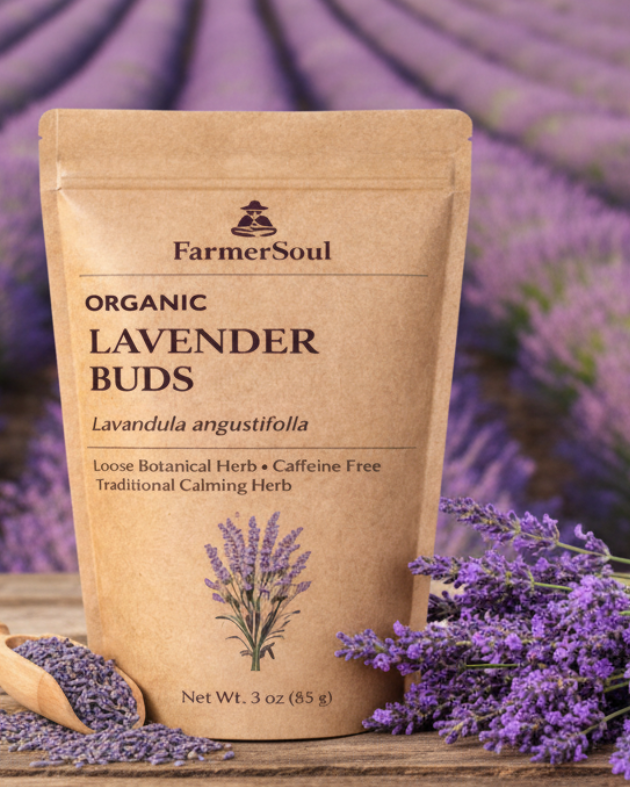
Lavender is one of the most recognized and beloved botanicals in the world. Known for its soft floral aroma, calming presence, and beautiful purple flowers, lavender has been used for centuries in homes, gardens, kitchens, bath rituals, and traditional herbal practices.
Today, lavender remains popular as a dried herb, culinary botanical, tea ingredient, sachet filler, aromatherapy plant, and natural home fragrance. Its appeal comes from a combination of beauty, fragrance, tradition, and versatility.
The most commonly used culinary and herbal species is Lavandula angustifolia, often called English lavender or true lavender. This variety is especially valued for its gentle floral scent and balanced flavor, making it suitable for teas, baking, syrups, honey infusions, sachets, and handmade botanical products.
Explore our full organic culinary lavender collection to find lavender for tea, baking, sachets, and natural home use.
What Is Lavender?
Lavender is a flowering plant in the mint family, known botanically as Lavandula. While there are many types of lavender, Lavandula angustifolia is the variety most often associated with culinary use, traditional herbal preparations, and premium dried lavender buds.
The dried flower buds are small, fragrant, and naturally rich in aromatic compounds. When handled or steeped, lavender releases a floral, herbaceous scent that is often described as clean, calming, slightly sweet, and gently earthy.
Because lavender is naturally strong, a little goes a long way. This is especially true in tea and cooking, where too much lavender can become overly floral or perfume-like.
For everyday tea and kitchen use, our organic culinary lavender buds are designed for brewing, baking, infusions, and home apothecary projects. For larger projects, events, or small business use, explore our bulk organic culinary lavender buds.
A Brief History of Lavender
Lavender has a long history of use throughout the Mediterranean and Europe. It has traditionally been associated with cleanliness, relaxation, home fragrance, and personal care.
The name “lavender” is often connected to the Latin word lavare, meaning “to wash.” This reflects lavender’s historical association with bathing, linen care, and aromatic cleansing rituals.
For generations, dried lavender flowers were placed in linen closets, tucked into pillows, added to bath water, blended into herbal teas, and used to freshen homes naturally. In traditional European herbalism, lavender flower was also valued as a gentle botanical for relaxation, rest, and emotional comfort.
Traditional Uses of Lavender
Lavender has been used in many traditional ways, both inside and outside the home. Its most common uses include tea, sachets, bath preparations, culinary recipes, and aromatic rituals.

Lavender for Relaxation Rituals
Lavender is best known for its connection to relaxation. Its soft floral aroma has traditionally been used to create a peaceful environment, especially in the evening.
People often use lavender in bedtime routines, bath blends, pillow sachets, and herbal teas. The goal is not to treat a medical condition, but to create a calming ritual that helps the body and mind transition into rest.
Lavender’s reputation as a calming herb is one reason it remains so popular in natural home and wellness products today.
Lavender and Sleep Traditions
Lavender has long been associated with sleep rituals. Dried lavender buds are commonly placed in sachets near pillows, inside linen drawers, or beside the bed.
Traditional herbal references also recognize lavender flower as a botanical historically used to support rest and ease occasional stress-related tension. In everyday use, lavender is often part of a broader evening routine that may include warm tea, soft lighting, a bath, or a quiet moment before bed.
A simple lavender sachet near the bedside can add a gentle floral scent to the room without needing sprays, candles, or synthetic fragrance.
For more on evening use, read The Sleep Ritual: Why Loose Leaf Lavender Is the Ultimate Nightcap.
Lavender Tea
Lavender has traditionally been enjoyed as an herbal tea, usually in small amounts. Its flavor is floral, lightly sweet, herbaceous, and slightly earthy.
Because lavender is naturally aromatic, it is often blended with softer herbs such as chamomile, lemon balm, mint, rose petals, or oatstraw. Honey also pairs beautifully with lavender tea and helps round out the floral notes.
For a simple cup of lavender tea, many people start with a small pinch to 1 teaspoon of dried lavender buds per cup of hot water. Steep for several minutes, then strain. If the tea tastes too strong, reduce the amount of lavender or blend it with another herb.
Lavender tea is especially popular as an evening beverage or after-meal herbal infusion.
For step-by-step brewing guidance, see our full guide: How to Make Lavender Tea: A Simple Guide to Brewing Floral Herbal Tea.
Lavender in Culinary Use
Culinary lavender can be used in many recipes, including baked goods, syrups, lemonades, teas, honey infusions, shortbread cookies, cakes, and herbal sugars.
The key is restraint. Lavender should support a recipe, not overpower it. Used properly, it adds a delicate floral note that pairs well with lemon, vanilla, berries, cream, honey, chocolate, and herbs like rosemary or mint.
Popular culinary lavender uses include:
Lavender tea
Lavender lemonade
Lavender simple syrup
Lavender honey
Lavender sugar
Lavender shortbread
Lavender cookies
Lavender cake
Lavender-infused whipped cream
Lavender herbal blends
When using lavender in food, it is important to choose culinary-grade lavender intended for edible use.
For more kitchen inspiration, visit our Lavender Baking Guide: How to Use Culinary Lavender in Baking.
Lavender Sachets and Home Fragrance
One of lavender’s most beloved traditional uses is in sachets.

Dried lavender buds are often placed in small cotton, linen, or muslin bags and used around the home.
Lavender sachets can be placed in:
Drawers
Closets
Linen cabinets
Suitcases
Cars
Gift baskets
Nightstands
Bathroom shelves
Wedding favor bags
Sachets are a simple way to enjoy lavender’s natural fragrance without artificial sprays or synthetic fresheners. Over time, the scent may soften. Gently squeezing the sachet can help release more of the natural aroma from the dried buds.
For home use ideas, read How to Use Lavender Sachets Around the Home, or shop our filled organic lavender sachets.
Lavender in Bath and Body Rituals
Lavender has also been used in traditional bath and body care. Dried lavender flowers may be added to bath bags, herbal steams, handmade soaps, bath salts, and natural self-care products.
For baths, it is best to place lavender buds inside a small muslin bag rather than adding loose herbs directly to the water. This keeps the bath easier to clean while still allowing the aroma to infuse.

Lavender’s association with bathing and personal care is one of the reasons it continues to be used in soaps, lotions, oils, and spa products.
Herbal Properties of Lavender
Lavender’s herbal value comes largely from its naturally occurring aromatic compounds. These compounds are responsible for lavender’s scent and are part of the reason lavender has been studied in modern herbal and aromatherapy research.
Two of the most discussed natural compounds in lavender are:
Linalool
Linalyl acetate
These compounds are found in lavender essential oil and contribute to the plant’s floral, calming aroma. Lavender also contains other plant constituents, including flavonoids and tannins, depending on the plant material and preparation method.
It is important to understand the difference between dried lavender buds and concentrated lavender essential oil. Dried lavender buds are commonly used in teas, culinary recipes, sachets, and gentle home preparations. Essential oil is much more concentrated and should be used with greater care.
What Modern Research Says About Lavender
Modern research has explored lavender in several areas, especially aromatherapy, mood, relaxation, and sleep-related routines. Much of the scientific research focuses on lavender essential oil rather than dried lavender buds.
This distinction matters. A cup of lavender tea, a sachet, and an essential oil capsule are not the same thing. They differ in strength, concentration, use, and safety considerations.
Research interest around lavender often centers on its aroma and natural compounds, especially linalool and linalyl acetate. These compounds are commonly discussed in relation to lavender’s calming reputation.
The European Medicines Agency recognizes lavender preparations in the context of traditional herbal use for mild symptoms of mental stress, exhaustion, and aiding sleep. This traditional-use classification is based on long-standing use rather than the same type of clinical evidence required for pharmaceutical drugs.
The National Center for Complementary and Integrative Health also notes that lavender has been used for a variety of wellness purposes, while emphasizing that research quality, safety, and effectiveness can vary depending on the form of lavender used.
Lavender should not be viewed as a cure or treatment for medical conditions. Instead, it is best understood as a traditional botanical with a long history of use in calming routines, home fragrance, tea, and personal care.
Everyday Benefits of Lavender
Lavender’s everyday benefits are practical, sensory, and traditional. It brings beauty, fragrance, and ritual into daily life.
Creates a Calming Atmosphere
Lavender’s aroma can help create a peaceful environment at home. This is why it is commonly used in bedrooms, bathrooms, reading corners, meditation spaces, and evening routines.
Supports Simple Evening Rituals
A cup of lavender tea, a lavender sachet near the bed, or a warm bath with lavender can become part of a calming nighttime ritual.
Naturally Freshens Small Spaces
Lavender sachets are useful in drawers, closets, cars, and linen cabinets. They provide a gentle botanical scent without synthetic fragrance.
Adds Floral Flavor to Recipes
Culinary lavender adds a unique floral note to tea, honey, syrups, baked goods, and drinks. When used carefully, it can make simple recipes feel elegant and special.
Makes Thoughtful Handmade Gifts
Lavender is often used in wedding favors, shower favors, holiday gifts, sachet kits, bath blends, and handmade botanical products. Its scent, appearance, and traditional meaning make it naturally giftable.
How to Use Dried Lavender Buds
Dried lavender buds are one of the most versatile forms of lavender. They can be used in many simple ways at home.
For Tea
Use a small pinch to 1 teaspoon of dried lavender buds per cup of hot water. Steep for 5 to 7 minutes, then strain. Blend with chamomile, lemon balm, mint, or honey for a softer flavor.
For Sachets
Fill a small cotton or muslin pouch with dried lavender buds. Place in drawers, closets, luggage, cars, or gift baskets.
For Baking
Use lavender sparingly. Start with a small amount and increase only if needed. Lavender pairs especially well with lemon, vanilla, honey, berries, and shortbread.
For Lavender Sugar
Mix dried lavender buds with sugar and let the mixture sit in a sealed jar. The sugar will gradually take on lavender’s floral aroma.
For Bath Use
Place lavender buds in a muslin bag and add to warm bath water. Avoid loose herbs directly in the tub for easier cleanup.
For Honey Infusions
Lavender can be infused into honey for a floral, aromatic sweetener. It pairs especially well with tea, toast, yogurt, cheese boards, and desserts.
Lavender Safety and Responsible Use
Lavender is generally well tolerated when used in normal food and household amounts. However, like all botanicals, it should be used responsibly.
Dried lavender buds are different from lavender essential oil. Essential oil is highly concentrated and should not be consumed unless specifically directed by a qualified professional.
People who are pregnant, nursing, taking medication, managing a health condition, or preparing herbal products for children should consult a qualified healthcare provider before using lavender in medicinal amounts.
Some people may be sensitive or allergic to lavender, especially in concentrated fragrance or essential oil form. If irritation occurs, discontinue use.
For tea and culinary use, start with small amounts. Lavender has a strong flavor and aroma, so more is not always better.
Dried Lavender Buds vs. Lavender Essential Oil
This is an important distinction.
Dried lavender buds are the whole dried flowers of the lavender plant. They are commonly used for tea, culinary recipes, sachets, bath blends, and crafts.
Lavender essential oil is a concentrated aromatic extract. It is much stronger than dried buds and is typically used in aromatherapy, topical products, or fragrance applications.
For everyday home use, dried lavender buds are gentle, versatile, and easy to work with. They offer lavender’s natural aroma in a simple botanical form.
Related Farmer Soul Lavender Guides
If you are exploring lavender for tea, baking, sachets, or natural home use, these guides may be helpful:
How to Make Lavender Tea: A Simple Guide to Brewing Floral Herbal Tea
Lavender Baking Guide: How to Use Culinary Lavender in Baking
How to Use Lavender Sachets Around the Home
The Sleep Ritual: Why Loose Leaf Lavender Is the Ultimate Nightcap
Shop Farmer Soul Lavender
Explore our full organic culinary lavender collection.
Shop organic culinary lavender buds for tea, baking, syrups, honey infusions, and home apothecary use.
Shop bulk organic culinary lavender buds for larger projects, events, small business use, soap making, sachets, and bulk tea blending.
Shop filled organic lavender sachets for drawers, closets, cars, linens, gifts, and natural home fragrance.
Frequently Asked Questions About Lavender
What is lavender traditionally used for?
Lavender has traditionally been used for relaxation rituals, sleep routines, herbal teas, bath preparations, sachets, linen storage, and natural home fragrance. In European herbal tradition, lavender preparations have been recognized for long-standing use related to mild stress, exhaustion, and sleep support.
Is lavender used as a medicinal herb?
Lavender has a long history in traditional herbal medicine. European herbal references recognize lavender preparations as traditional herbal medicinal products for mild symptoms of mental stress and exhaustion and to aid sleep. However, this traditional use should not be confused with a medical cure or treatment. Lavender products should be used responsibly and are not a substitute for professional medical care.
What are the main natural compounds in lavender?
Lavender’s aroma comes largely from naturally occurring aromatic compounds, especially linalool and linalyl acetate. These compounds are commonly discussed in scientific literature related to lavender essential oil and its fragrance profile.
Can you drink lavender as tea?
Yes, culinary-grade dried lavender buds can be used to make herbal tea. Lavender has a strong floral flavor, so it is best to start with a small amount. Many people blend lavender with chamomile, lemon balm, mint, rose, or honey for a softer and more balanced cup.
What does lavender tea taste like?
Lavender tea has a floral, lightly sweet, herbaceous flavor. If too much lavender is used, the tea can become overly perfume-like or soapy. A small amount usually creates the best flavor.
Is culinary lavender different from regular lavender?
Culinary lavender is lavender intended for food and beverage use. The most common culinary variety is Lavandula angustifolia, also known as English lavender or true lavender. Lavender used only for fragrance, crafts, or decorative purposes may not be suitable for tea or cooking.
What is the difference between dried lavender buds and lavender essential oil?
Dried lavender buds are the whole dried flowers of the lavender plant. They are commonly used for tea, baking, sachets, bath blends, and crafts. Lavender essential oil is a highly concentrated aromatic extract and should be used much more carefully. Essential oil should not be consumed unless directed by a qualified professional.
Are lavender sachets only for drawers?
No. Lavender sachets can be used in drawers, closets, linen cabinets, suitcases, cars, bathrooms, gift baskets, and bedside areas. They are a simple way to enjoy lavender’s natural aroma around the home.
Is lavender safe?
Lavender is generally considered safe in normal food amounts for most people. However, concentrated lavender products, essential oils, and medicinal amounts should be used with caution. People who are pregnant, nursing, taking medication, managing a health condition, or preparing herbal products for children should consult a qualified healthcare provider.
How can I use dried lavender buds at home?
Dried lavender buds can be used for tea, baking, lavender sugar, syrups, honey infusions, sachets, bath bags, handmade gifts, and natural home fragrance. They are one of the most versatile botanicals to keep in a home apothecary.
Sources & References
This article is for educational purposes only and is not intended to diagnose, treat, cure, or prevent any disease.
European Medicines Agency. “Lavandulae aetheroleum.” Herbal medicinal product page discussing traditional use of lavender oil preparations for mild symptoms of mental stress, exhaustion, and aiding sleep.
https://www.ema.europa.eu/en/medicines/herbal/lavandulae-aetheroleum
European Medicines Agency. “Community Herbal Monograph on Lavandula angustifolia Miller, aetheroleum.” Traditional herbal medicinal product monograph for lavender oil.
https://www.ema.europa.eu/en/documents/herbal-monograph/final-community-herbal-monograph-lavandula-angustifolia-miller-aetheroleum_en.pdf
National Center for Complementary and Integrative Health. “Lavender: Usefulness and Safety.” Overview of lavender uses, safety considerations, and research limitations.
https://www.nccih.nih.gov/health/lavender
Malloggi, E., et al. “Lavender aromatherapy: A systematic review from essential oil quality and administration practices to cognitive enhancing effects.”
https://pmc.ncbi.nlm.nih.gov/articles/PMC9291879/
Batiha, G. E. S., et al. “A Review of the Bioactive Components and Pharmacological Properties of Lavandula Species.”
https://pmc.ncbi.nlm.nih.gov/articles/PMC10079719/