


Lavender: The Complete Guide to Uses, Benefits, and How to Choose Quality Buds

Lavender: The Complete Guide to Uses, Benefits, and How to Choose Quality Buds
Lavender is one of the most recognized and beloved botanicals in the world. Known for its soft floral aroma, calming presence, and beautiful purple flowers, lavender has been used for centuries in homes, gardens, kitchens, bath rituals, and traditional herbal practices. But not all lavender is the same — understanding quality, sourcing, and proper use makes all the difference between an average experience and an exceptional one.
The most commonly used culinary and herbal species is Lavandula angustifolia, often called English lavender or true lavender. Explore our full organic culinary lavender collection.
What Is Lavender?
Lavender is a flowering plant in the mint family, known botanically as Lavandula. Lavandula angustifolia is the variety most associated with culinary use, traditional herbal preparations, and premium dried lavender buds. The dried flower buds are small, fragrant, and naturally rich in aromatic compounds. Because lavender is naturally strong, a little goes a long way — especially in tea and cooking, where too much becomes overly floral or perfume-like. Shop our organic culinary lavender buds for brewing, baking, infusions, and home apothecary projects, or our finely milled organic lavender flower powder for stirring straight into drinks and recipes. For larger projects, explore our bulk organic culinary lavender buds.
Culinary vs. Decorative Lavender
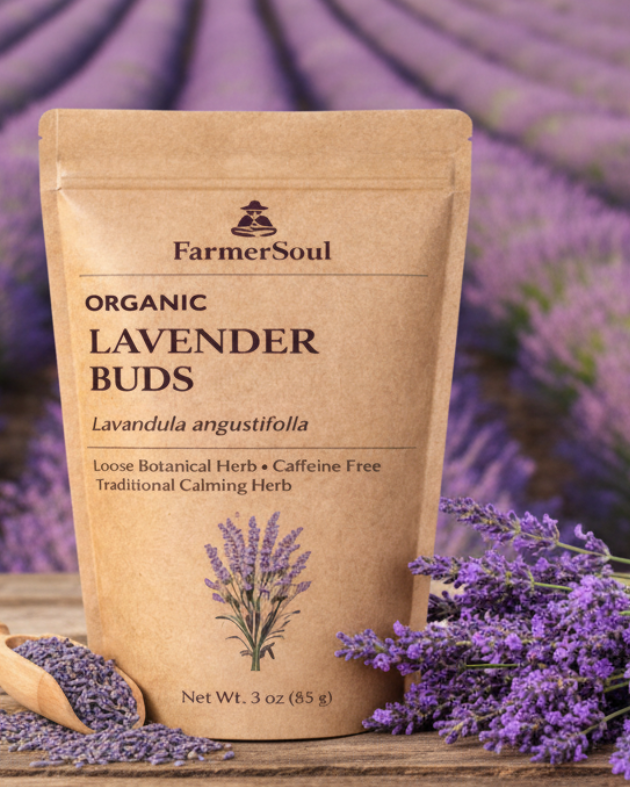
Culinary lavender is food-grade, properly dried, mild and slightly sweet in flavor, and free from chemical sprays. Decorative lavender is often treated with pesticides, has a strong bitter or overly perfumed taste, and is intended for potpourri or crafts. Always choose culinary-grade Lavandula angustifolia for anything you eat or drink.
How to Identify High-Quality Lavender Buds
Quality buds should have deep purple color (not faded or grey), a strong clean aroma (fresh, not dusty), and whole intact structure (not powdery or broken). Avoid brown or dull-colored buds, weak or stale smell, and excess stems or debris.
From Field to Cup: Why Sourcing Matters

At Farmer Soul, our Organic Culinary Lavender Buds are exclusively Lavandula angustifolia, naturally dried to preserve aroma and color, packed loose to maintain whole buds, and free from unnecessary additives. Explore here >>
A Brief History of Lavender
Lavender has a long history of use throughout the Mediterranean and Europe, traditionally associated with cleanliness, relaxation, home fragrance, and personal care. The name "lavender" is often connected to the Latin word lavare, meaning "to wash." For generations, dried lavender flowers were placed in linen closets, tucked into pillows, added to bath water, and blended into herbal teas.
Traditional Uses of Lavender

Lavender is best known for its connection to relaxation — in bedtime routines, bath blends, pillow sachets, and herbal teas. For more on evening use, read The Sleep Ritual: Why Loose Leaf Lavender Is the Ultimate Nightcap.
Lavender Tea: Start with ½ teaspoon dried buds per cup of hot water, steep 5 to 7 minutes, strain. Honey, chamomile, lemon balm, and mint all pair beautifully. Full guide: How to Make Lavender Tea, Properly.
Lavender in Culinary Use: Works in baked goods, syrups, lemonades, teas, honey infusions, shortbread, and cakes. The key is restraint. See our Lavender Baking Guide and How to Make Lavender Syrup at Home. For an easier, no-straining option, finely milled lavender flower powder stirs directly into coffee, matcha, and smoothies — see Lavender Powder vs. Lavender Buds to decide which form fits your recipe.
Lavender Sachets:  Dried lavender buds in small cotton or muslin bags — in drawers, closets, cars, and bedside areas. Read How to Use Lavender Sachets Around the Home, or shop our filled organic lavender sachets.
Lavender in Bath Rituals:  Place lavender buds inside a small muslin bag rather than directly in the water for easier cleanup.
Herbal Properties and Research
Lavender's herbal value comes largely from its naturally occurring aromatic compounds — primarily linalool and linalyl acetate. The European Medicines Agency recognizes lavender preparations for traditional herbal use related to mild mental stress, exhaustion, and aiding sleep. The National Center for Complementary and Integrative Health notes that effectiveness can vary by form used. Lavender should not be viewed as a cure or treatment for medical conditions.
Lavender Safety and Responsible Use
Lavender is generally well tolerated in normal food and household amounts. Dried lavender buds differ from lavender essential oil — essential oil is highly concentrated and should not be consumed unless directed by a qualified professional. People who are pregnant, nursing, taking medication, or managing a health condition should consult a healthcare provider before using lavender in medicinal amounts.
Frequently Asked Questions About Lavender
What is lavender traditionally used for?
Lavender has traditionally been used for relaxation rituals, sleep routines, herbal teas, bath preparations, sachets, linen storage, and natural home fragrance. European herbal tradition recognizes lavender preparations for long-standing use related to mild stress, exhaustion, and sleep support.
Can you drink lavender as tea?
Yes. Culinary-grade dried lavender buds can be used to make herbal tea. Start with a small amount — lavender has a strong floral flavor. Many people blend it with chamomile, lemon balm, mint, or honey for a softer cup.
Is culinary lavender different from regular lavender?
Yes. Culinary lavender (Lavandula angustifolia) is selected specifically for food and beverage use. Lavender sold for fragrance, crafts, or decoration may not be suitable for tea or cooking.
What is the difference between dried lavender buds and lavender essential oil?
Dried lavender buds are the whole dried flowers used for tea, baking, sachets, and bath blends. Lavender essential oil is a highly concentrated aromatic extract that should not be consumed unless directed by a qualified professional.
Is lavender powder different from lavender buds?
Both come from the same organic Lavandula angustifolia flowers. Lavender powder is finely milled, so it dissolves into drinks and batters without straining, while whole buds are better suited to steeped tea, syrups, and sachets.
Is lavender safe?
Lavender is generally considered safe in normal food amounts for most people. Concentrated lavender products and medicinal amounts should be used with caution. Pregnant, nursing, or medicated individuals should consult a healthcare provider.
Related Farmer Soul Lavender Guides
- How to Make Lavender Tea: Properly, Without Bitterness
- How to Make Lavender Syrup at Home
- Lavender Baking Guide: How to Use Culinary Lavender in Baking
- How to Use Lavender Sachets Around the Home
- Lavender Varieties Explained: English vs. French vs. Spanish Lavender
- Lavender Powder vs. Lavender Buds: Which Should You Use?
- How to Use Lavender Powder in Coffee, Matcha & Smoothies
- Lavender and Stress: What the Science Actually Shows
- What Does Research Say About Lavender and Sleep?
Shop Farmer Soul Lavender
Shop organic culinary lavender buds for tea, baking, syrups, and honey infusions.
Shop organic lavender flower powder for coffee, matcha, smoothies, and baking.
Shop bulk organic culinary lavender buds for larger projects and small business use.
Shop filled organic lavender sachets for drawers, closets, cars, linens, and gifts.
Sources & References
This article is for educational purposes only and is not intended to diagnose, treat, cure, or prevent any disease.
European Medicines Agency. "Lavandulae aetheroleum."
https://www.ema.europa.eu/en/medicines/herbal/lavandulae-aetheroleum
National Center for Complementary and Integrative Health. "Lavender: Usefulness and Safety."
https://www.nccih.nih.gov/health/lavender
Batiha, G. E. S., et al. "A Review of the Bioactive Components and Pharmacological Properties of Lavandula Species." PMC.
https://pmc.ncbi.nlm.nih.gov/articles/PMC10079719/